Sub-Flooring
A solid, flat base for every floor
New subfloor for additions and remodels, replacement of water-damaged sections, and fixes for floors that squeak, bounce or dip.
Request a Quote
Tell us about the job. We reply during business hours.
By submitting you agree to our Terms and Privacy Policy.
- Licensed in MA
- Bonded & Insured
- Local MA Carpenters
- Start in 1-2 Weeks
- 3 Years in Business
CB Carpentry's Sub-Flooring Services
The subfloor is the structural layer of plywood or OSB fastened to your floor joists. Hardwood, tile, vinyl and carpet all sit on top of it, so any flaw in the subfloor shows up in the finished floor.
CB Carpentry installs and repairs subfloors for Massachusetts homeowners so that new flooring goes down flat, quiet and solid.
Subfloor work is usually invisible once the job is done, but it is what you feel every time you walk across a room. A flat, stiff, well-fastened subfloor means no squeaks, no soft spots, tile that does not crack and hardwood that stays tight. It is also far easier and less expensive to fix while the floor is open than after new flooring is installed.
We often handle subfloor work together with hardwood flooring installation, kitchen and bath remodels and additions, so the floor is prepared and finished by one crew without waiting between trades.
This service is part of our Rough Carpentry work.
01 Subfloor Installation for Additions & Remodels
In new additions and gut renovations, we install tongue-and-groove subfloor panels across the joists, glued with construction adhesive and fastened on a tight schedule. Panels are staggered so seams do not line up, and edges land on framing where they should. The result is a stiff, quiet floor ready for whatever finish you choose. Where the new floor meets an existing one, we match heights so you do not end up with an awkward lip or a ramp between rooms.
In bathrooms and kitchens, we plan for the extra layers that tile and stone require so finished floor heights work out.
02 Subfloor Replacement & Water-Damage Repair
Leaks around toilets, tubs, dishwashers and exterior doors can soak a subfloor for years before anyone notices. The wood softens, delaminates and eventually sags. We cut out the damaged area back to sound material, check the joists underneath for rot, and install new subfloor that sits flush with the surrounding floor. If the joists are damaged too, we repair them as part of the same job so the floor is solid again.
Finding and fixing the source of the leak is part of the job, otherwise the new subfloor will fail the same way. We point out what we find so your plumber can address it.
03 Squeaky & Bouncy Floor Repair
Squeaks usually come from subfloor moving against nails or joists. Bounce comes from joists that are too small or too far apart for the span. Depending on what we find, we refasten the subfloor with screws and adhesive, add blocking between joists, shim gaps, or sister the joists. Fixing these issues before new flooring goes down is far easier than trying to chase squeaks through a finished floor.
Many squeaks can be fixed from below in an unfinished basement, which avoids disturbing the finished floor above and is usually a short visit. Glue and screws keep floors quiet for good.
04 Leveling & Prep for Tile and Hardwood
Tile needs a stiff, flat surface or the grout and tile will crack. Hardwood needs a flat base or the boards will gap and cup. We check the floor with a straightedge, plane down high spots, shim low joists and add a second layer of subfloor where tile requires it. Older Massachusetts homes often have floors that have settled over decades; we can flatten them enough for new flooring without tearing out the whole structure.
This step costs little compared to the flooring itself, and it is the single best way to make sure a new floor performs the way it should for years.
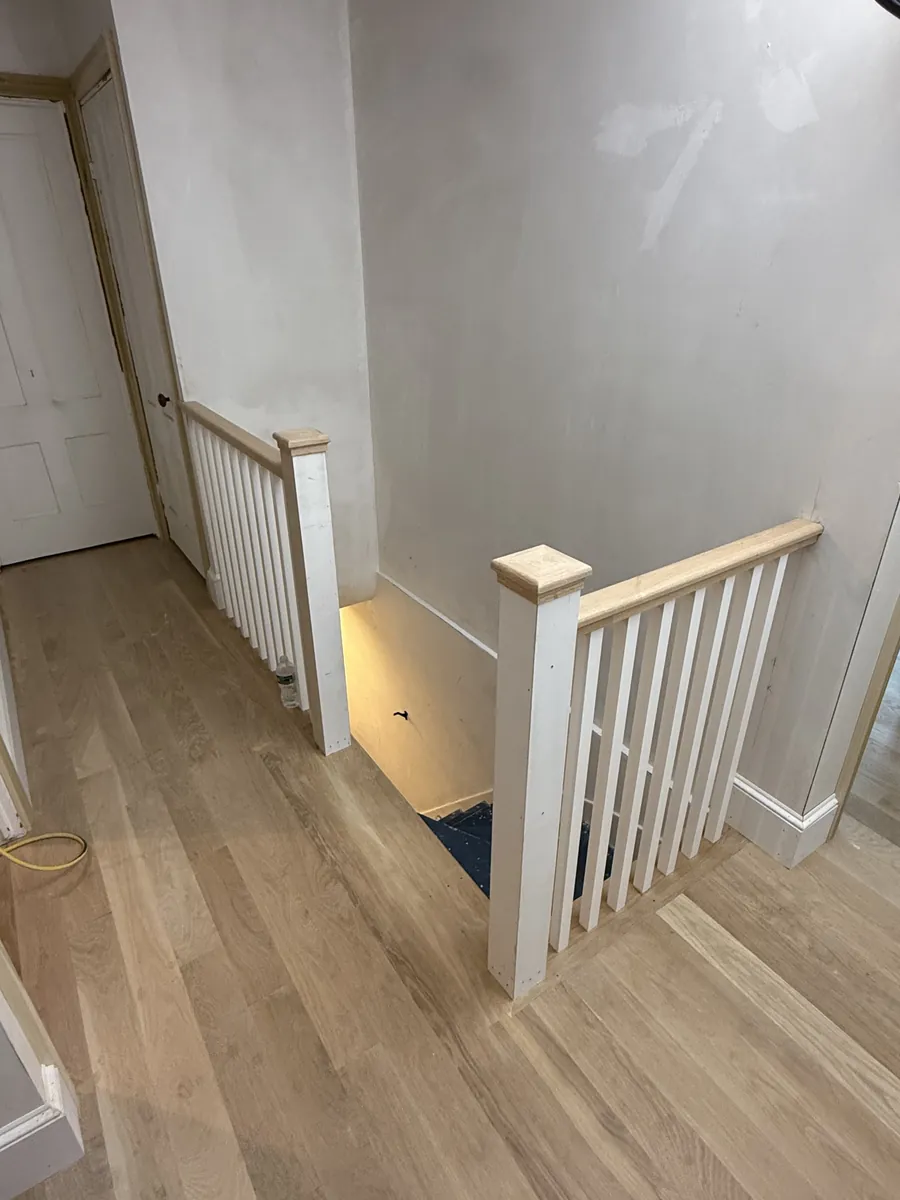

Signs Your Subfloor Needs Attention
Soft or spongy spots, loose tile or cracked grout, floorboards that keep separating, squeaks that are getting worse, and dark stains around fixtures are common signs. If you are already replacing the finish floor, it is the best time to fix what is underneath.
Subfloor Materials We Use
Most new subfloors are tongue-and-groove plywood or OSB rated for floors, glued and screwed or nailed to the joists. Tile areas may get an additional layer and a backer board. We choose the thickness based on joist spacing and the finish floor going on top.
How Your Carpentry Project Works
Tell us what you want built, repaired or finished and where the house is.
We look at the space, take measurements and talk through materials and options.
You get a quote for the scope we discussed. No pressure to decide on the spot.
Most jobs start within 1-2 weeks of approval. We keep the work area tidy as we go.
We walk the finished work with you and fix anything that is not right.
Sub-Flooring FAQ
Can you fix squeaky floors without removing the flooring?
Sometimes. If we can get to the floor from the basement, we can often add blocking, shims or screws from below. If not, the best time to fix it is when the finish floor is being replaced.
Should I replace the subfloor when I install new hardwood?
Only if it is damaged, soft or out of flat. A sound subfloor can usually be refastened and leveled. We check it before your new floor goes down.
What causes a soft spot near my toilet?
Usually a slow leak from the wax seal or supply line that has soaked the subfloor. The fix is to remove the toilet, cut out the damaged area, check the joists and install new subfloor.
Do you install the finish flooring too?
Yes, we install hardwood flooring. See our flooring services.
Ready to Book Your Project?
Call CB Carpentry during business hours or send your project details and we will get back to you with next steps.