Flooring
Hardwood floors laid tight and flat
Solid and engineered hardwood flooring installation, with subfloor prep, transitions, thresholds and stair nosing done right.
Request a Quote
Tell us about the job. We reply during business hours.
By submitting you agree to our Terms and Privacy Policy.
- Licensed in MA
- Bonded & Insured
- Local MA Carpenters
- Start in 1-2 Weeks
- 3 Years in Business
CB Carpentry's Hardwood Flooring Services
Hardwood floors last for generations when they are installed over a flat, solid base with room to move with the seasons.
CB Carpentry installs solid and engineered hardwood flooring in Massachusetts homes and handles the carpentry around it: subfloor prep, transitions, thresholds and matching stair parts.
A hardwood floor is a long-term investment, and the installation determines how it performs. We start by checking the subfloor and the moisture conditions, plan the layout so boards run in the best direction and seams are staggered properly, and leave the right expansion gap at walls. Then we install the floor tight and flat and finish every edge with trim and transitions.
We also coordinate floors with the rest of the house: matching stair treads and nosing, reinstalling or replacing baseboard and shoe molding, and making sure doors still swing freely over the new floor height.
01 Solid Hardwood Flooring Installation
Solid hardwood, such as oak, maple or hickory, is milled from a single piece of wood and can be sanded and refinished many times. It is usually nailed over a wood subfloor with a moisture barrier underneath. We acclimate the flooring to the house, plan the layout so boards run in the best direction for the room and the joists, and leave expansion space at the walls hidden by baseboard and shoe molding. Solid hardwood suits most rooms above grade and is a natural match for older Massachusetts homes with original wood floors.
We also face-nail or glue where needed near walls and doorways for a secure, tight installation.
02 Engineered Hardwood Flooring
Engineered hardwood has a real wood top layer over a stable plywood core. It moves less with humidity, which makes it a good choice over radiant heat, in basements and in condos where floors may be installed over concrete. Depending on the product it can be nailed, glued or floated. Engineered floors come prefinished, so the room is usable as soon as installation is done.
We match the installation method to your subfloor and the product so the floor stays stable. Engineered planks are often wider than solid strip flooring, which suits modern and open layouts and reduces the number of seams.
03 Floor Prep & Subfloor Repair
Flooring problems such as squeaks, gaps and cupping often start below the boards. Before installing, we check the subfloor for flatness and soft spots, refasten it, plane high spots and fix low areas. Damaged sections are replaced as part of our sub-flooring work. This step is what makes a new floor lie flat and stay quiet.
Where the floor meets a different height, such as tile or carpet, we plan the transition before installation so the final heights work out. Low spots get leveling compound or shims, and high joints are planed down. We also check for moisture before installing over basements.
04 Transitions, Thresholds & Stair Nosing
Where hardwood meets tile, carpet or another room, the transition needs to be smooth and secure. We install reducers, thresholds and T-moldings, undercut door jambs so flooring slides beneath, and fit stair nosing and landing trim so floors and stairs match. Then we reinstall or replace baseboard and shoe molding to finish the room.
Stair nosing is matched to the floor species and finish so steps look continuous with the room. We also install flush vent covers and fit flooring neatly around door casings by undercutting the trim instead of leaving a gap. Every transition is fastened securely so it does not shift.
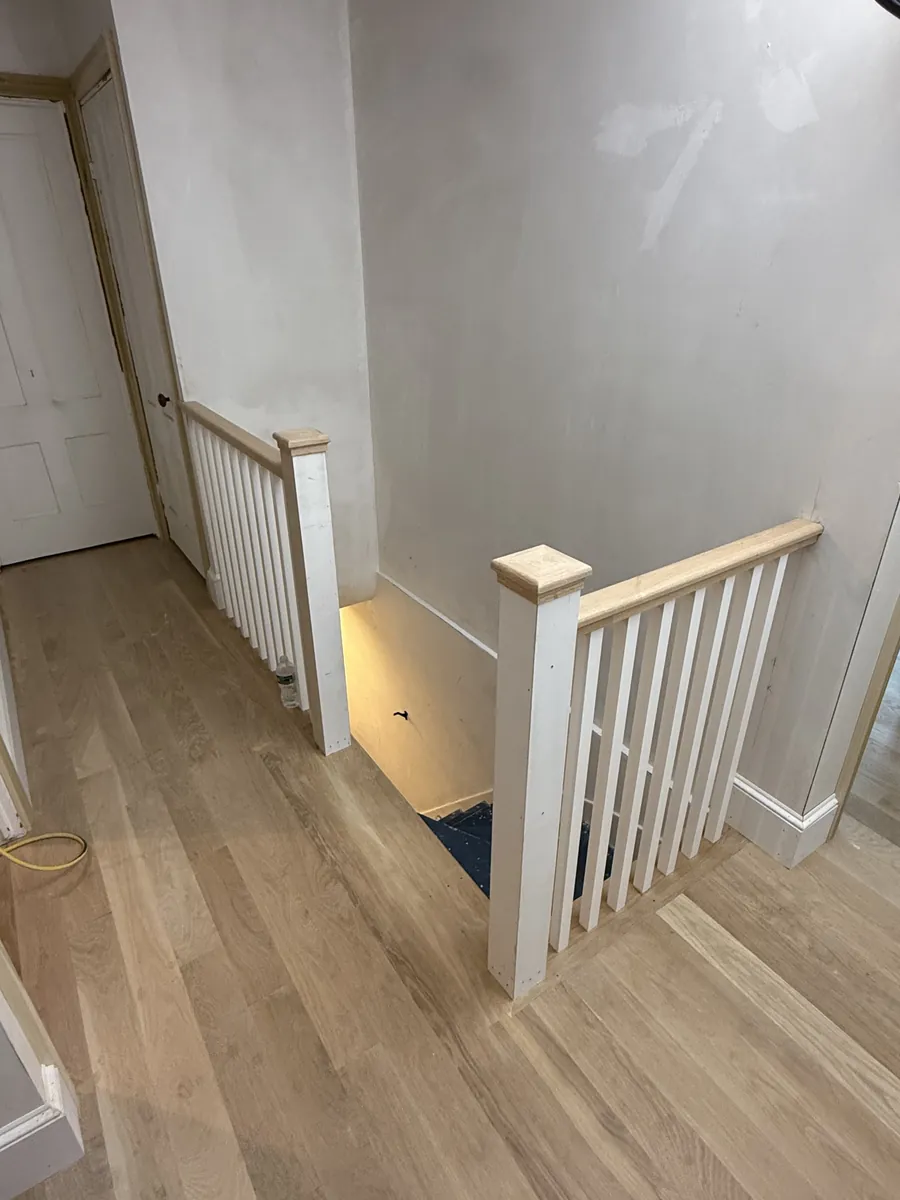

Solid or Engineered: Which Is Right?
Solid hardwood is a long-term choice for most above-grade rooms. Engineered hardwood is better over concrete, in basements, over radiant heat and in spaces with bigger humidity swings. Both look like real wood because they are real wood on top.
Caring for New Hardwood
Keep indoor humidity steady, use felt pads under furniture, clean with products made for wood floors and wipe up spills quickly. In New England winters, a humidifier helps prevent gaps between boards.
How Your Carpentry Project Works
Tell us what you want built, repaired or finished and where the house is.
We look at the space, take measurements and talk through materials and options.
You get a quote for the scope we discussed. No pressure to decide on the spot.
Most jobs start within 1-2 weeks of approval. We keep the work area tidy as we go.
We walk the finished work with you and fix anything that is not right.
Flooring FAQ
Do you sand and refinish floors?
Our focus is installing new hardwood and the carpentry around it. Tell us about your project and we will let you know what we can do.
Can hardwood go in a basement?
Solid hardwood is not recommended below grade. Engineered hardwood is often a better fit for basements.
How long should flooring acclimate?
It depends on the product and the season. Manufacturers give specific guidance, and we follow it so the floor is stable once installed.
Can you match new flooring to my existing floors?
We can match species, width and direction closely. Matching color usually means refinishing so old and new floors are stained together.
Ready to Book Your Project?
Call CB Carpentry during business hours or send your project details and we will get back to you with next steps.