Staircases & Railings
Safe, solid stairs that look great
Stair construction, hardwood treads and risers, balusters, handrails and newel posts, built for safety and finished to show.
Request a Quote
Tell us about the job. We reply during business hours.
By submitting you agree to our Terms and Privacy Policy.
- Licensed in MA
- Bonded & Insured
- Local MA Carpenters
- Start in 1-2 Weeks
- 3 Years in Business
CB Carpentry's Staircase & Railing Services
A staircase is one of the most used parts of a house and one of the first things guests see. It has to be safe, with consistent steps and solid railings, and it should look good from top to bottom.
CB Carpentry builds new stairs, remodels worn or carpeted stairs with hardwood treads, and installs balusters, handrails and newel posts in homes across Massachusetts.
Stairs get more daily use than almost any other part of a house, and they have to meet specific safety rules for riser height, tread depth, headroom and railing height. We build and repair stairs to those rules first, then focus on the details that make them look good: tight joints at treads and risers, clean returns and railings that feel solid in your hand.
Popular stair projects include replacing carpet with oak treads and painted risers, swapping old spindles for new balusters, adding a wall-mounted handrail and re-anchoring a loose newel post. Each one makes the stairs safer and gives the entry or hallway a finished look.
This service is part of our Finish Carpentry work.
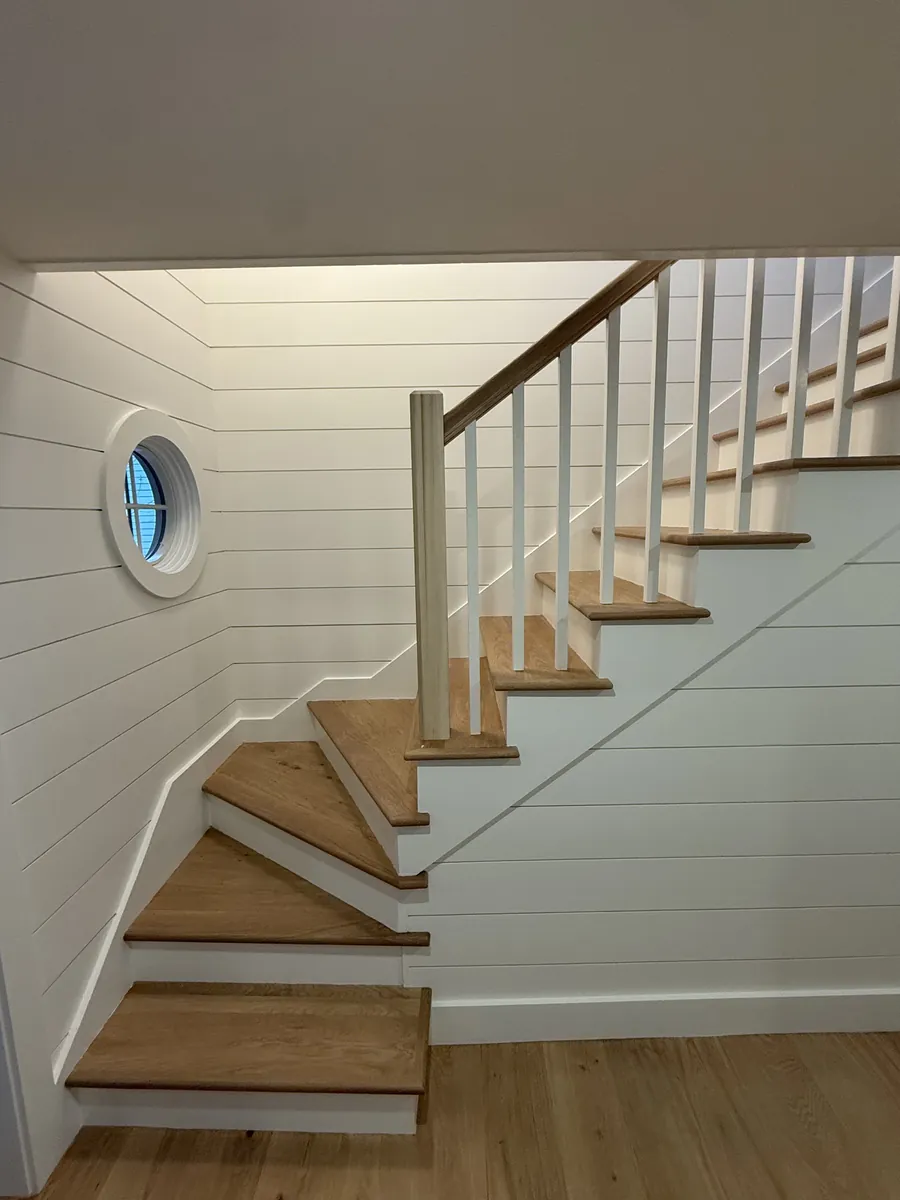
01 Staircase Construction
New stairs start with careful math. Every step must have the same rise and run, and the total has to land correctly at the top and bottom floors. We lay out and cut stringers, frame landings and build the stair structure for additions, finished basements, attic conversions and remodels that move a staircase. Stairs are inspected under the building code for riser height, tread depth, headroom and railing height, so we build to those numbers from the start.
Treads and risers are installed tight to the stringers so the finished stairs feel solid and do not squeak. Stringers are cut precisely.
02 Hardwood Tread & Riser Replacement
Old carpeted stairs often hide plain construction-grade treads. Replacing them with solid oak or another hardwood, paired with painted risers, is one of the most popular stair updates. We remove the old treads and nosings, level and secure the stringers so the new treads do not squeak, and install new treads and risers cut to fit each step. Treads can be stained to match your floors or left for a clear finish.
Painted risers and stained treads are a classic combination that hides scuffs well and suits most homes, from older colonials to newer construction. Treads are glued and screwed down.
03 Balusters, Handrails & Newel Posts
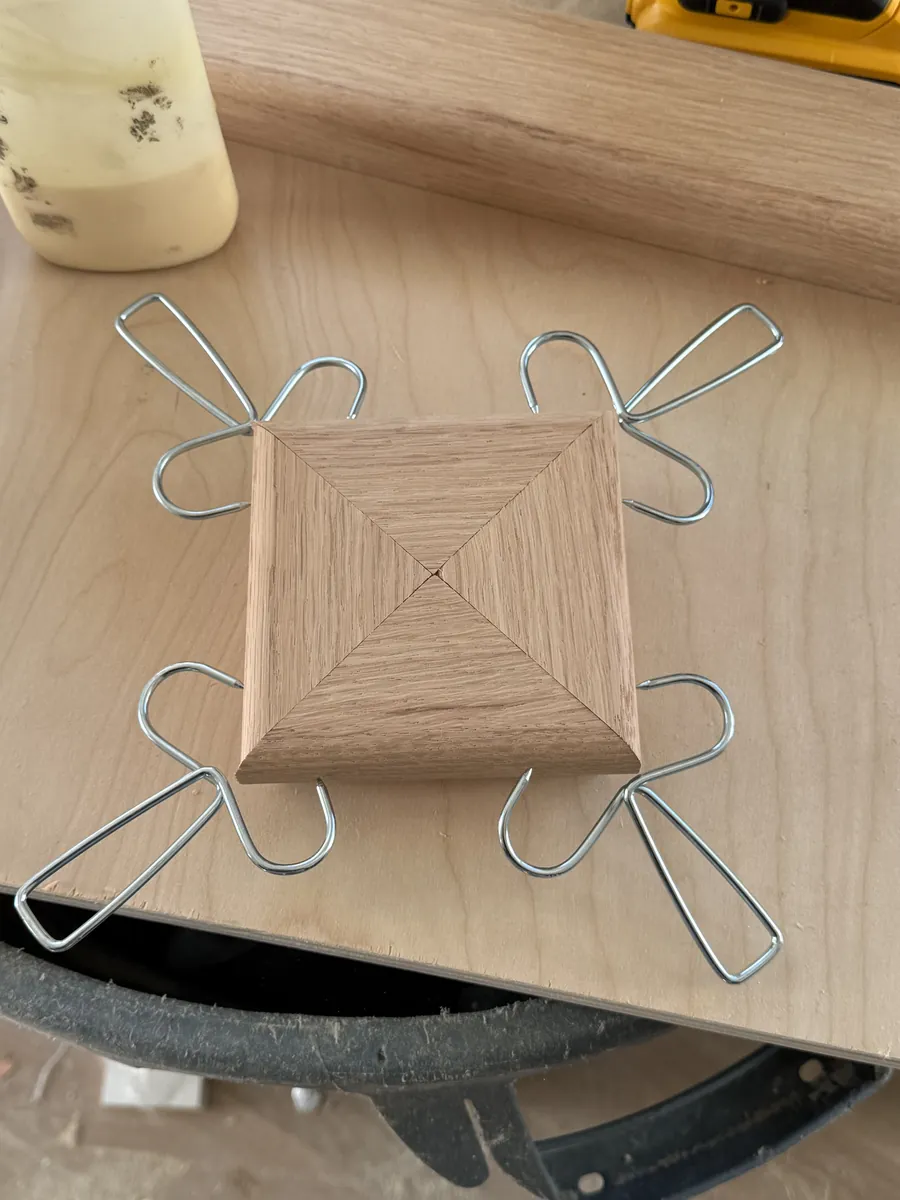
Railings keep people safe and give the staircase its style. We install new balusters (spindles), handrails, wall-mounted rails and newel posts, or replace old ones that have loosened over time. A loose newel post is a safety problem and usually needs to be re-anchored into the framing, not just glued. We fit balusters at the right spacing, cap rails at landings, and assemble newel caps and trim with tight joints.
Wall-mounted handrails, like the oak rail in our photos, need solid blocking behind the drywall so they will not pull loose over time. All joints are glued and fastened securely.
04 Basement & Attic Stairs
Basement and attic stairs are often steep, narrow and worn. When a basement or attic is being finished, the stairs usually need to be rebuilt or improved to meet code and match the new space. We rebuild these stairs, add handrails and finish them with treads and risers that suit the room. For outdoor steps and deck stairs, see deck and porch framing.
Basement stairs are often the steepest in the house. Rebuilding them with deeper treads and lower risers, plus a sturdy handrail, makes them far safer for everyday use and for carrying laundry or storage boxes up and down.

Stair Safety Problems to Watch For
Steps of different heights, loose or wobbly railings, missing handrails, worn nosings and balusters spaced too far apart are common hazards. They are usually simple carpentry fixes and worth taking care of before someone gets hurt.
Matching Stairs to Your Floors
When new hardwood floors go in, stairs that do not match stand out. We can install treads in the same species and coordinate the stain so the floor and stairs read as one design.
How Your Carpentry Project Works
Tell us what you want built, repaired or finished and where the house is.
We look at the space, take measurements and talk through materials and options.
You get a quote for the scope we discussed. No pressure to decide on the spot.
Most jobs start within 1-2 weeks of approval. We keep the work area tidy as we go.
We walk the finished work with you and fix anything that is not right.
Staircases & Railings FAQ
Can you replace carpeted stairs with hardwood?
Yes. We remove the carpet and old treads, secure the stringers and install new hardwood treads and risers cut to fit each step.
My railing is loose. Can it be fixed?
Usually. Loose newel posts and rails often need to be re-anchored into the stair framing with proper hardware. We check and fix the connection rather than just adding glue.
Do new stairs need a permit?
Building new stairs or changing their structure generally requires a building permit in Massachusetts. Replacing treads and railings on existing stairs often does not, but we confirm before starting.
Can my stair treads match my new floors?
Yes. We can use the same wood species and coordinate the finish so stairs and floors match.
Ready to Book Your Project?
Call CB Carpentry during business hours or send your project details and we will get back to you with next steps.